
Core Specialty
Trauma & Emotional Regulation
Reprogramming the nervous system to heal past wounds, lift emotional fatigue, and eliminate anxiety.
Understanding the Mind-Body Connection
How Past Wounds Drive Present Anxiety & Depression
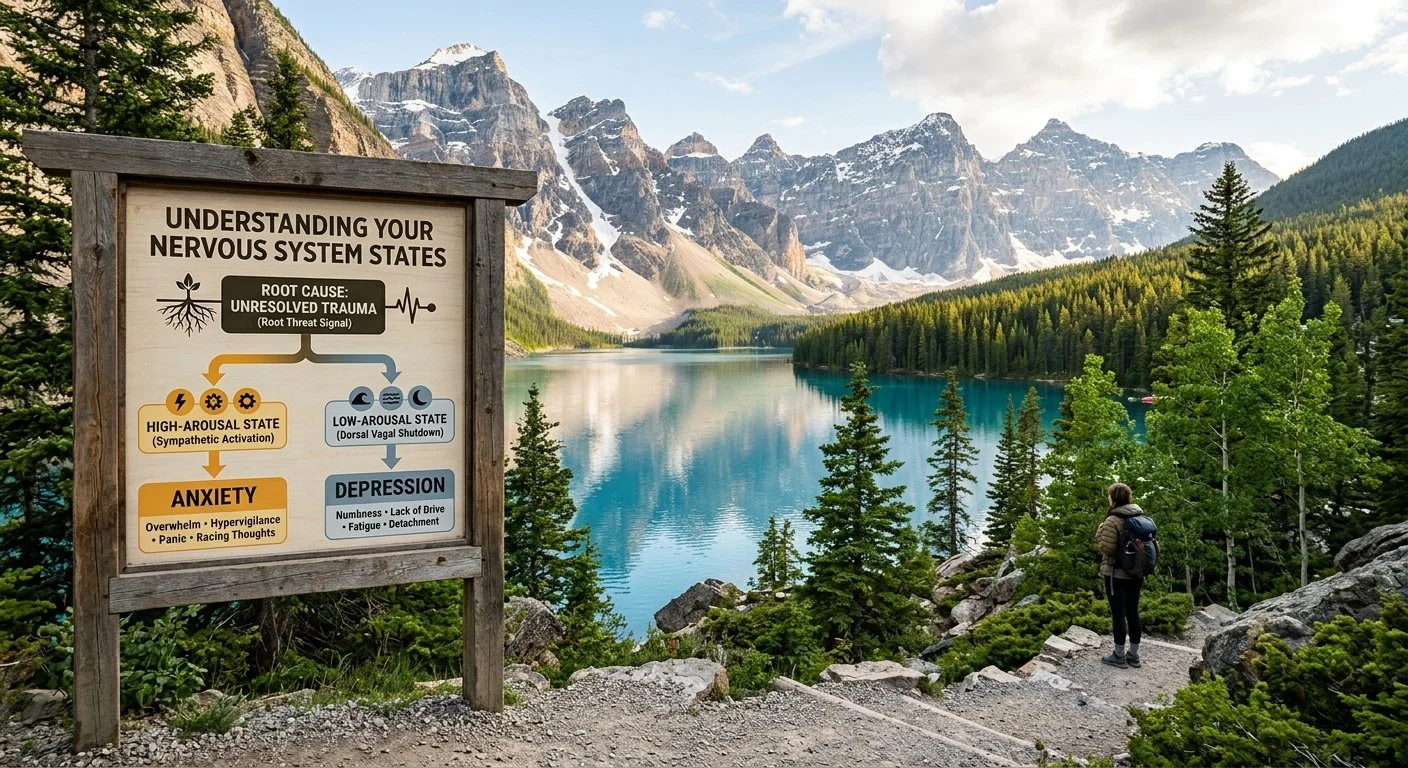
When you experience trauma or chronic, overwhelming stress, the impact doesn't just stay in your memories—it registers deep within your nervous system. What many experience as unrelated struggles with anxiety, low mood, and relationship friction are actually connected survival responses of a nervous system stuck in self-protection.
The Neurobiology of Your Symptoms
To heal, it helps to understand how your body reacts when safety feels compromised:
1. Anxiety: The High-Arousal Survival Response (Fight / Flight)
When past trauma remains unprocessed, your brain's alarm system stays hyper-active. Your sympathetic nervous system continuously signals danger, keeping you in a state of hypervigilance.
How it manifests: Chronic overthinking, panic attacks, physical restlessness, irritability, and a constant fear of the "other shoe dropping"
2. Depression: The Low-Arousal Survival Response (Freeze / Shutdown)
When prolonged anxiety and stress exhaust your biological resources, or when a threat feels impossible to escape, your nervous system switches to conservation mode (dorsal vagal shutdown).
How it manifests: Brain fog, emotional numbness, loss of motivation, chronic fatigue, and feeling disconnected from yourself and others.
3. Relational Strain: Protective Defenses
When your nervous system is stuck in either anxiety (hyper-activation) or depression (shutdown), engaging in open, secure relationships becomes challenging.
How it manifests: You may find yourself becoming overly reactive, withdrawing emotionally during conflict, over-pleasing to avoid rejection, or feeling unable to build genuine trust.